Jharkhand continues to record one of the highest child marriage rates in the country, with 32.2 per cent of girls married before 18, far above the national average of 23 per cent. Districts such as Pakur, Dumka, and Godda stand out as hotspots, exposing the deep social and economic roots of the practice.
While child marriage persists across India, Jharkhand’s challenge is sharper. Experts point to a complex mix of poverty, dowry practices, tribal customs, and migration pressures. Many rural households see marriage as an escape from financial burden, while the lack of accessible secondary schools drives dropout rates among girls. Compared to states like Bihar, Odisha, and West Bengal, Jharkhand consistently shows a slower decline, making it a focus of national concern.
Advertisement
Government laws and community traditions often collide on the ground. The Prohibition of Child Marriage Act, 2006, backed by Jharkhand’s 2015 rules, gives officials authority to stop illegal unions. But in many villages, elders still defend the practice as part of culture. Child Marriage Prohibition Officers and police face resistance from families who view state intervention as an attack on community honour.
For poor families, marrying a daughter early is often seen as practical. Dowry tends to rise with the girl’s age, and one less mouth to feed reduces strain on household resources. But the hidden costs are severe. Studies show early marriage reduces women’s participation in the workforce, perpetuates intergenerational poverty, and increases healthcare costs from adolescent pregnancies and maternal deaths. UNICEF and World Bank reports estimate that ending child marriage could generate billions in economic gains by unlocking girls’ full potential.
Jharkhand is attempting a course correction. The state recently launched its first training workshop for Child Marriage Prohibition Officers and Child Development Project Officers, supported by UNICEF, ICRW, C3, AVA, YUVA, and other organisations. This training marks the start of a five-year Action Plan to eliminate child marriage by 2030. Officials say the new strategy goes beyond paper commitments, combining law enforcement, education, health awareness, and community participation in a coordinated framework.
Evidence consistently shows that education delays marriage. Girls who stay in school until 18 are far less likely to be pushed into early unions. Skill development programmes are helping some adolescents negotiate with families, but dropout rates remain high in rural belts. “Educated and self-reliant girls are better positioned to make their own decisions,” said Manoj Kumar, Secretary, Department of Women, Child Development and Social Security.
Civil society partners are emerging as critical players. UNICEF and ICRW provide technical expertise, while grassroots organisations like YUVA and AVA work directly in villages. In areas where NGOs have a strong presence, success stories are more frequent—weddings halted, girls returning to schools, families persuaded to wait. Activists argue that the state alone cannot win this battle without community trust.
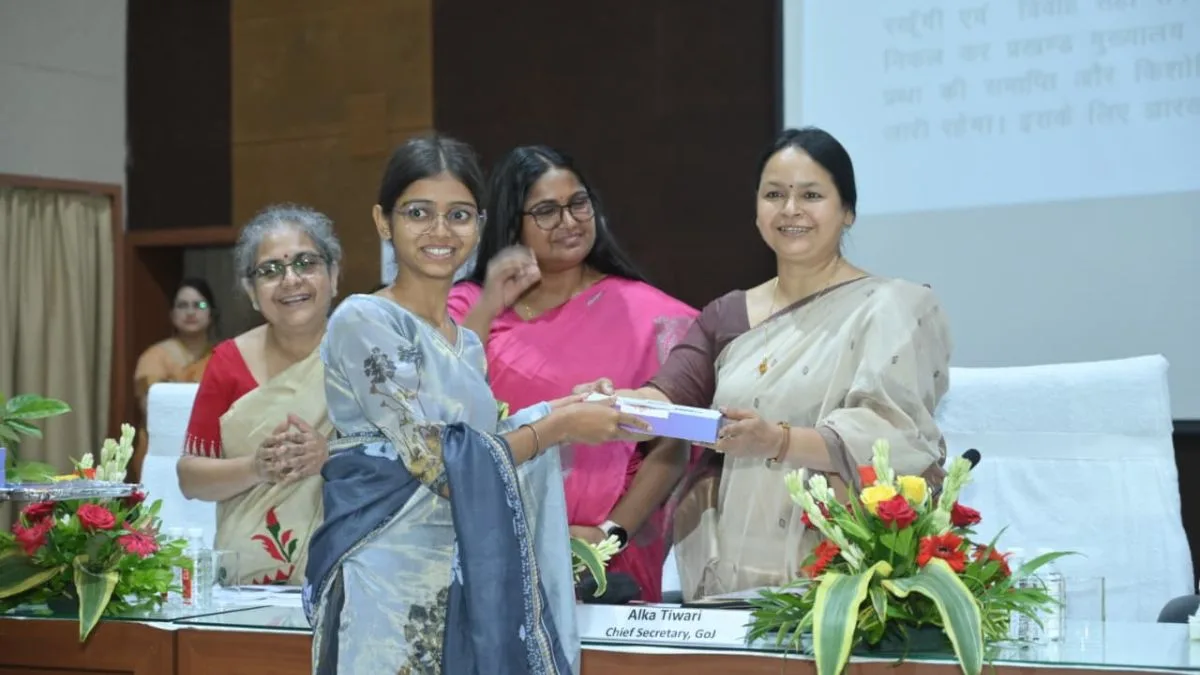
Amid the grim statistics, there are glimmers of change. At the Ranchi workshop, ten adolescent girls were honoured for resisting or escaping early marriages. Some relied on peer support groups, others used helpline numbers, and a few found courage through social media networks. Their testimonies showed a new generation more willing to say no, even against intense family pressure. Mobile phones, WhatsApp groups, and youth clubs are amplifying awareness like never before.
Despite a strong legal framework, convictions remain rare. Many cases collapse due to a lack of reporting, police hesitation, or community silence. Officers often find themselves isolated when families close ranks. Training officials to intervene early and mobilise local support is seen as crucial, but experts warn that enforcement will continue to lag unless social attitudes shift.
Jharkhand’s dilemma is stark: as the state promotes industrial corridors, IT hubs, and green innovation, nearly one in three of its girls lose their childhoods to early marriage. The contrast between development ambitions and ground realities raises a fundamental question: Can growth be meaningful if basic rights remain unfulfilled?
Chief Secretary Alka Tiwari, speaking at the workshop, called it unacceptable that “79 years after Independence, the state is still debating how to end child marriage.” With a five-year action plan, stronger institutional training, and the rising voices of adolescent girls, Jharkhand may now be preparing for its most determined push yet. The challenge will be whether the system, society, and economy align to finally end a practice that has endured for generations.